


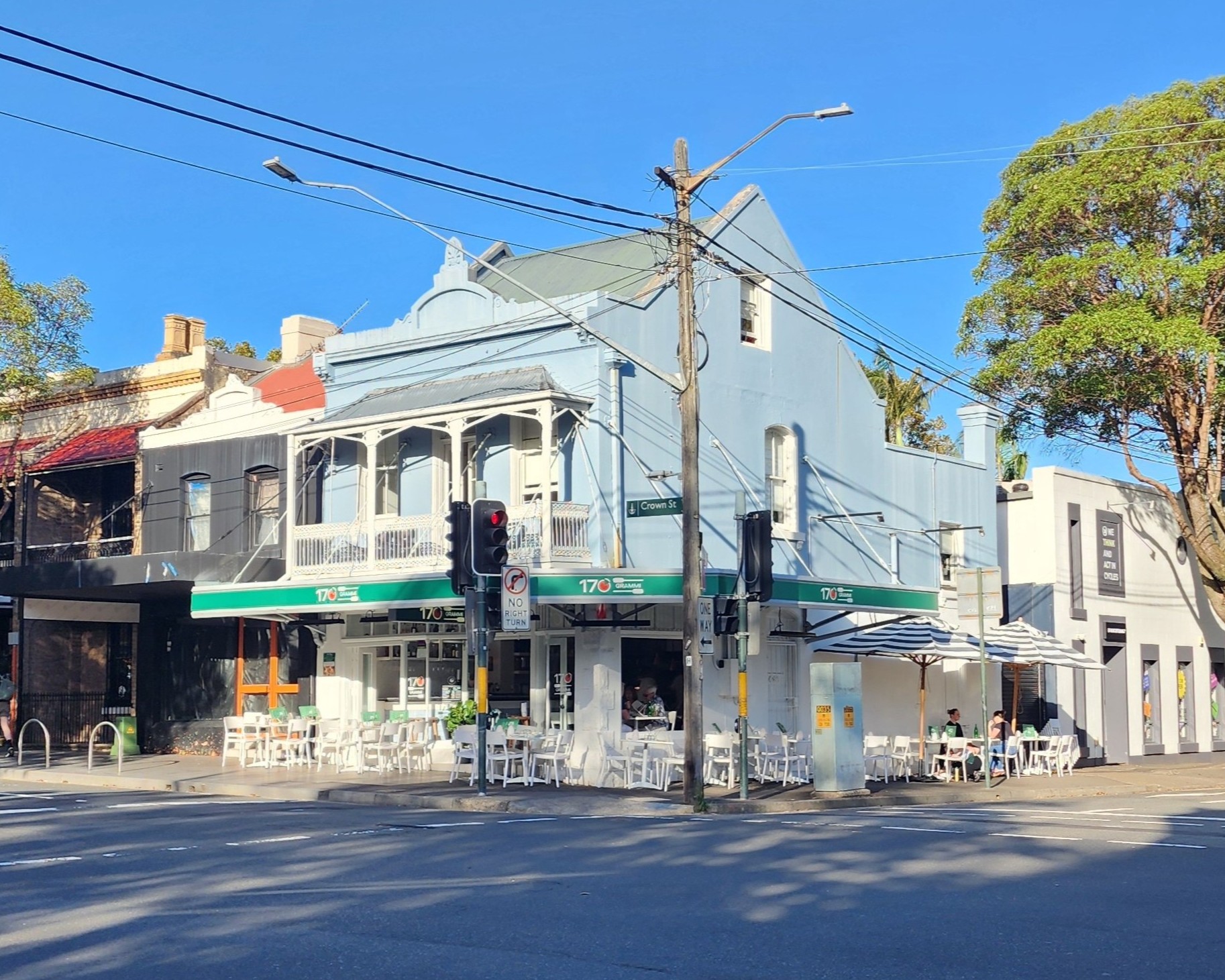
Today, 428 Crown Street, Surry Hills, is home to 170 Grammi Pizzeria, part of the lively collection of restaurants, cafés and independent businesses that make Crown Street one of Sydney’s best-known neighbourhood destinations. Yet, like so many buildings in Surry Hills, this familiar shopfront has a much longer and rather colourful history. More than eighty years ago, the address found itself at the centre of a story that captured the attention of Sydney’s newspapers: the death of well-known underworld identity Donald Day, better known as “Donald the Duck.”
In January 1945, Sydney was approaching the end of the Second World War. The city had been transformed by the presence of thousands of Australian and American servicemen, while wartime restrictions encouraged a thriving after-hours economy of nightclubs, sly-grog establishments and black-market trading. Surry Hills and neighbouring Darlinghurst were at the centre of much of this activity, with their hotels, cafés and clubs attracting an extraordinary mixture of locals, servicemen and colourful Sydney identities.
Donald Day was one of them. Well known to police, he had accumulated numerous convictions and moved within Sydney’s underworld circles. His personal life was equally complicated. Day had maintained a long relationship with Irene Merle Day, but shortly before his death had become romantically involved with Joyce Teresa Cusack, a young machinist. The resulting love triangle would become an important part of the story surrounding his death.
On the evening of 28 January 1945, tensions came to a head at the Maxine Club (80 Oxford St, Woollahra), a popular wartime nightspot frequented by American servicemen. Irene confronted Cusack over her relationship with Day, and a heated argument followed. During the exchange, Irene reportedly made the ominous remark: “If you want him, you can have his dead body.” At the time it may have been little more than an angry comment, but events later that night would give the words an uncomfortable significance.
The drama subsequently moved to 428 Crown Street, where Irene was living and where 27-year-old salesman Keith Kitchener Hull was also staying. An earlier confrontation had already occurred between Hull and Day, leaving Hull injured. Concerned that further trouble might follow, Hull obtained a revolver from George Miller, an American serviceman staying at the Crown Street house.
At about 1:30 am on 29 January, Day returned to 428 Crown Street with an acquaintance, Edward Herbert Reeves, who remained outside while Day entered the building. A short time later, Reeves heard voices followed by several gunshots.
Inside, Day had confronted Hull in an upstairs room. Hull later claimed that Day was armed and attempted to shoot him, but that the weapon failed to fire. Hull responded by firing the revolver he had been given, fatally wounding Day. Within minutes, the Crown Street residence had become the scene of a major police investigation.
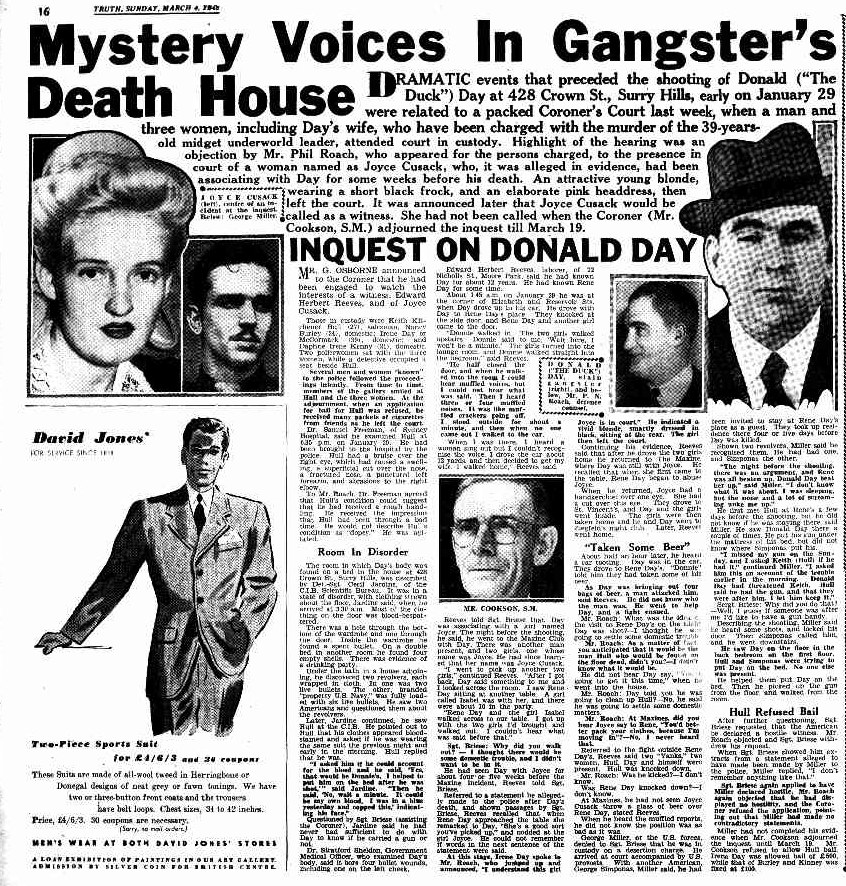
The circumstances surrounding the shooting were anything but straightforward. Two American servicemen, George Miller and William Simponis, became involved in the investigation after police discovered two stolen U.S. military revolvers concealed nearby. Miller admitted that he had supplied Hull with a weapon because of the earlier confrontation. Adding further intrigue to the case, the firearm that Hull claimed Day had been carrying was never recovered.
Police initially charged Hull, Irene Day and two other women, Daphne Irene Kinney and Nancy Burley, in connection with Day’s death. However, there was insufficient evidence to establish that the three women had been involved, and they were eventually discharged. Hull alone was committed to stand trial.
At Sydney’s Central Criminal Court in June 1945, Hull maintained that he had acted because he genuinely feared for his life. Evidence that he had been injured during an earlier confrontation with Day supported his account. After hearing the evidence, the jury retired for only 50 minutes before returning a verdict of not guilty, accepting Hull’s claim of self-defence.
Today, the world surrounding 428 Crown Street could hardly be more different. The address that briefly appeared in Sydney newspapers in 1945 as the setting for an extraordinary underworld drama is now 170 Grammi Pizzeria, welcoming diners rather than detectives through its doors.
It is a remarkable example of the layers of history hidden behind Surry Hills’ familiar shopfronts. Crown Street has continually reinvented itself, but its buildings remain, quietly connecting today’s thriving business precinct with the fascinating stories of its past.
This story features on the Surry Hills Historical True Crime Walking Tour – www.murdersmostfoul.com
By Elliot Lindsay,
Vice President, Surry Hills Business Precinct