

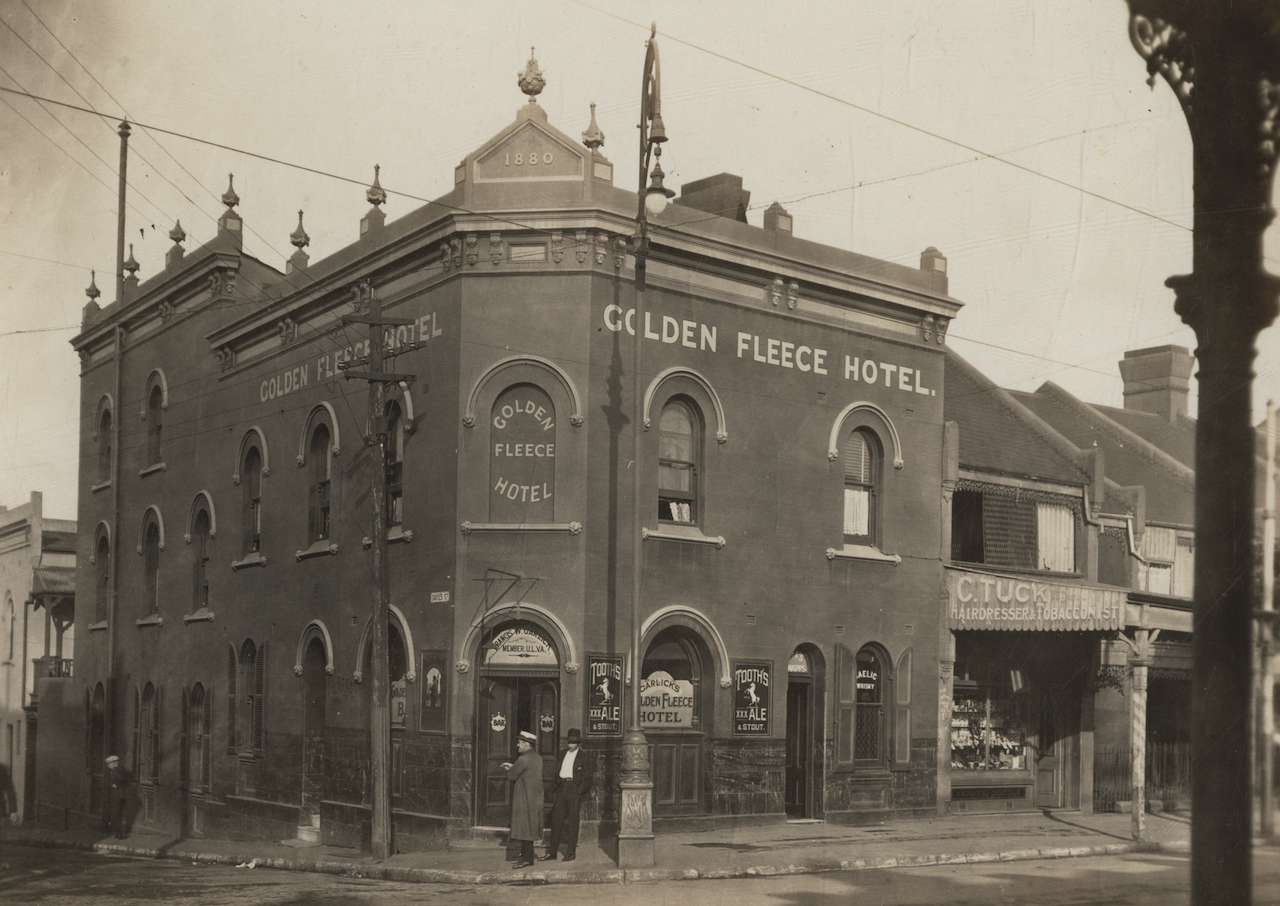
On the evening of 29 September 1890, the Golden Fleece Hotel at 538 Crown Street, Surry Hills, became the scene of one of the neighbourhood’s most extraordinary outbreaks of larrikin violence.
The trouble began innocuously enough. Several young men were playing billiards inside the hotel when about six strangers arrived and attempted to enter the billiard room. Publican Henry Waters stopped them and demanded to know what they wanted.
“We want to go to your billiard room to deal with the ‘push’ that is there,” they reportedly replied.
Waters noticed that the men were carrying clubs and refused them entry. He hustled them from the premises, suggesting that if they wanted to settle their differences, they would be better doing it outside or in a nearby park. Instead, the men turned on the publican and beat him with their clubs.
But that was only the beginning.
Over the following hour, an extraordinary crowd began gathering outside the Golden Fleece. Around 200 members and associates of the notorious Gipps Street Push eventually assembled in Crown Street, armed with bricks, stones, bottles and clubs. At about nine o’clock, the attack began.
The mob bombarded the hotel. Windows shattered beneath volleys of stones and bottles before rioters surged into the billiard room, smashing furniture and light fittings. Bottles and rocks were hurled at the glassware and liquor behind the bar. Unable to find police to intervene, Waters and the surrounding residents were effectively left to fend for themselves. The violence soon spilled beyond the pub, with neighbouring houses also pelted with stones and bottles.
After several hours, the rioters finally dispersed. Despite the enormous size of the mob, only three men were ultimately arrested. William Quinn, Thomas Maguire and Peter Maguire were convicted of assaulting Waters and fined £10 each, with six months in Darlinghurst Gaol awaiting them if they failed to pay. The Maguires were already notorious figures, having reportedly accumulated more than 35 periods of imprisonment in Darlinghurst Gaol.
The riot occurred during a particularly turbulent period in Sydney's history. The economic prosperity of the 1870s and 1880s was giving way to the severe depression of the 1890s. Unemployment and industrial unrest increased dramatically, including the great Maritime Strike that had begun only weeks before the Golden Fleece riot. In neighbourhoods such as Surry Hills, growing numbers of unemployed and under-employed young men provided fertile ground for the city's larrikin "pushes."
Among the most feared was the Gipps Street Push. Its territory centred on Gipps Street, which once extended westward from Crown Street towards the city. Around the turn of the twentieth century, the section between Crown and Elizabeth streets was renamed Reservoir Street—the name it retains today.
The Golden Fleece itself had a much longer history than the riot. A hotel licence had operated on the site from 1848, originally associated with an earlier building known as Bluck’s Family Hotel. The present building assumed its recognisable form following substantial work around 1880, during the economic boom that transformed Surry Hills. Its name, evoking Australia's wool industry, may have been intended to appeal to pastoralists visiting Sydney on business.
The Golden Fleece eventually lost its licence in 1921 as the Licensing Reduction Board dramatically reduced the number of hotels operating across inner Sydney. The building, however, survived. Today the old bar room and billiards saloon are occupied by Eyes & Looks Optometrists.
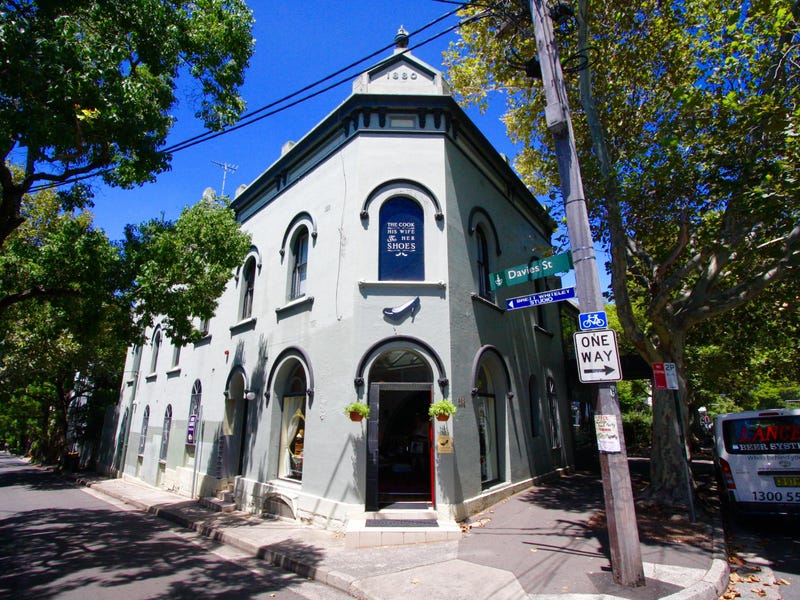
More than 130 years after the night when hundreds of larrikins bombarded its windows with bricks and bottles, the former Golden Fleece still stands on 538 Crown Street. A remarkably intact witness to the night when the local larrikins turned a Surry Hills pub into a battleground.
By Elliot Lindsay,
Vice President, Surry Hills Business Precinct